All Categories
Featured
Table of Contents
"Google, Amazon and Facebook all have numerous technology-related accreditations that can give trainees a leg up on competitors when it comes time to begin searching for jobs." A company technologist is a senior-level specialist who is accountable for ensuring companies invest sensibly in technologies. These specialists take into consideration the present tech landscape of an organization, determine requirements that can be attended to with technology and supervise the implementation of this technology.
"I now work throughout several software application platforms, helping companies to develop their own service management options," Munro states."A company technologist role does exist rather widely but primarily in a very particular specialized or with another title," Munro states. "Other similar titles include company expert or a services architect." "The BYOD trend has actually actually been developing extremely quickly in the work environment during the last few years," states Carlos Rodrigo Montagner, IT executive at Merial.
"So it takes some effort for IT departments to organize that, produce guidelines and to guarantee information stability throughout business." Montagner states business are changing with more powerful network security facilities and compliance standards for individual gadgets. "The broad adoption of huge data is making business way more efficient at finding and reaching their target market," states Pierre de Braux, content strategist at Spiralytics.
Huge data doesn't necessarily fix a particular problem; it makes us better problem solvers in basic."The more companies make use of information to improve, the more data they desire.
"The advancement of service technology is creating brand-new tasks, new industries and new role specializations, so it helps to keep up with the trends." Finding out about these big trends in service technology is an exceptional method to keep yourself competitive in both company and technology environments. Numerous of these modifications and trends in business innovation present a solid opportunity for experienced experts to step in and grow.
Legacy Systems Vs Modern Cloud
Wish to find out more about a few of the positions poised for success in a digital economy? Take a look at our short article, ".".
As we browse April 2026, the foundational components of digital facilities have actually moved. We are no longer just "relocating to the cloud"; we are orchestrating a complicated web of autonomous systems and distributed intelligence. The "development flywheel" is spinning faster than everbetter innovation leads to more information, which attracts more investment, additional speeding up infrastructure advancement.

For large-scale enterprises, this velocity demands a brand-new method to digital visibility. Online search engine are no longer just indexing text; they are indexing the abilities of these self-governing systems. The crossway of future service tech and search presence has become the primary battlefield for market share. At the heart of this shift is the move from General-Purpose AI to specialized, efficient models.
Gartner forecasts that by 2027, organizations will use task-specific AI designs three times more often than general-purpose LLMs. This shift is important for SEO methods that perform well for large companies. Big enterprises frequently have a hard time with "content bloat," where countless pages compete for the exact same keywords. By deploying SLMs to investigate and refine internal data structures, companies can ensure that their digital footprint is optimized for both human users and the AI-driven spiders that now control the search landscape.
Unlike standard chatbots that wait on a prompt, AI agents are goal-oriented. They don't just "chat"; they do. A representative can be given a high-level objective"Enhance our Q3 supply chain for expense"and it will autonomously evaluate suppliers, work out prices, and update inventory logs, only requesting human approval at important decision points.
Maximizing Enterprise Efficiency Through Modern Systems
For a company with a million-page site, manual auditing is impossible. Agentic AI can identify broken canonical tags, reroute loops, and schema mistakes in real-time, guaranteeing that the site stays completely crawlable. Moving from pilot to production stays an obstacle. While 38% of organizations are piloting agents, only 11% have them completely production.
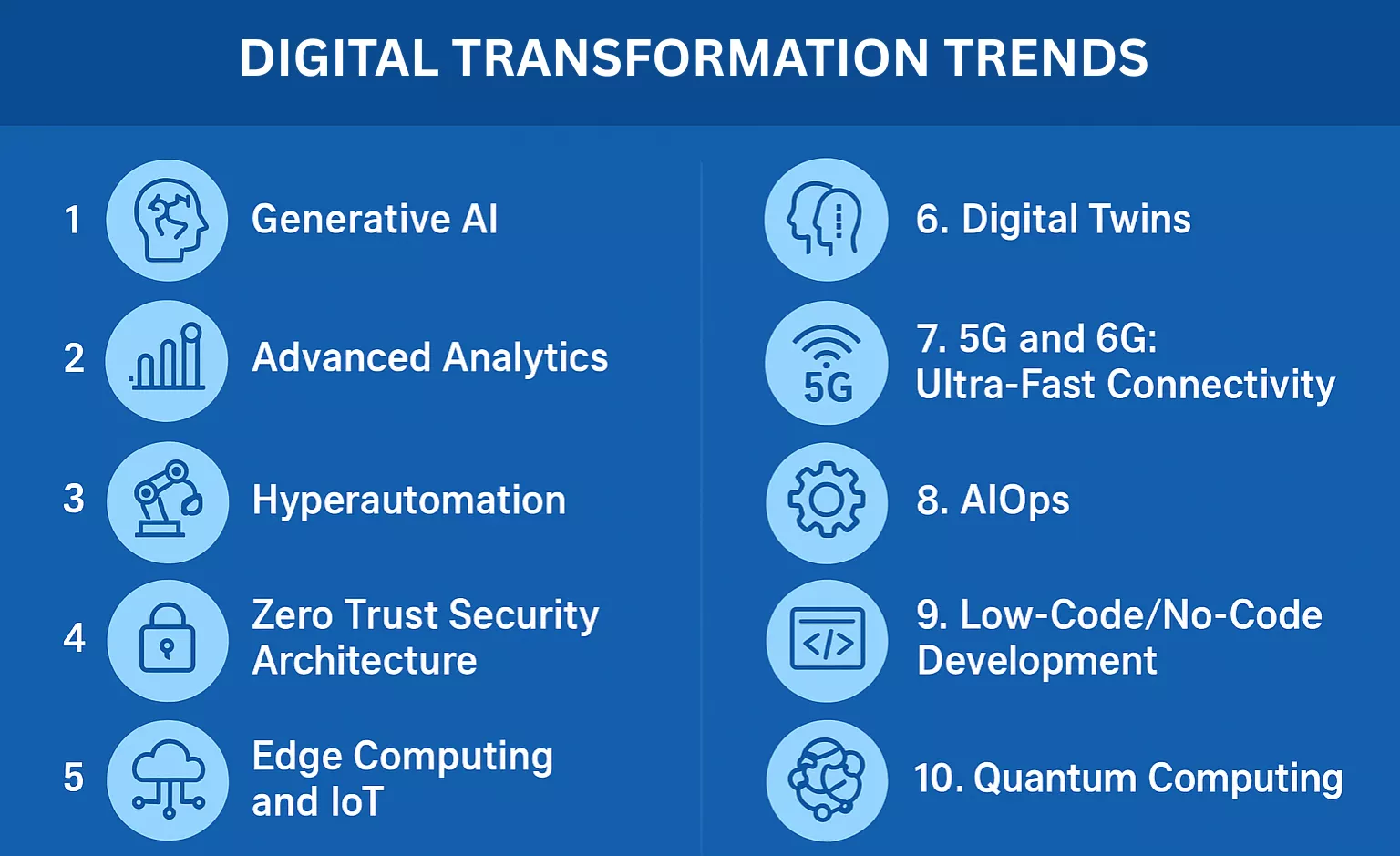
, these multiagent systems will end up being the "silicon workforce" that manages routine operations, allowing people to focus on top-level method. This method needs to consist of a robust SEO component, as the presence of these automated services determines their ultimate utility in a competitive market.
For smaller services, "Robotics-as-a-Service" (RaaS) designs have made this technology available without enormous in advance capital., these makers do not just move boxesthey anticipate upkeep needs and optimize routes in real-time.
Global cloud spending has actually hit an enormous $1.3 trillion, but the trend isn't simply "all-in" on public cloud. For large business, facilities speed is a direct ranking aspect.
Designing a 2026 AI-Cloud Strategy
HCI integrates compute, storage, and networking into a single software-defined platform. This allows businesses to have the agility of the cloud with the security and "immediacy" of on-premises hardware.
This shift is particularly obvious in how big business manage their digital presence. SEO is no longer a siloed marketing function; it is a core component of the enterprise innovation stack, needing deep integration with data science and facilities teams.
Unlike smaller websites, business websites often handle millions of URLs, complex internationalization, and tradition subdomains. To perform well, these organizations must concentrate on three crucial pillars: Programmatic SEO, Technical Crawl Efficiency, and E-E-A-T (Experience, Competence, Authoritativeness, and Reliability) at scale. includes using data-driven design templates to produce top quality, helpful pages for countless long-tail search inquiries.
The secret is ensuring that these pages offer authentic value and are not simply "entrance pages," which online search engine now punish heavily. By leveraging the SLMs pointed out earlier, large companies can produce special, contextually relevant material for these pages that pleases both user intent and search algorithms. is the second pillar.
Is Your Enterprise Ready for 2026 Transformation?
Future-ready enterprises use advanced server-side making and edge SEO to deliver pre-rendered pages to bots, guaranteeing that every second of crawl time is spent on revenue-generating content. Moreover, carrying out a robust internal linking structure using AI-driven recommendations can help distribute "link equity" more efficiently throughout a huge domain. needs a centralized method to brand authority.

Latest Posts
Charting Your Digital Roadmap for 2026
Mastering the 2026 Landscape of Digital Transformation
Strategic Planning for Your 2026 Digital Shift