All Categories
Featured
Table of Contents
Wish to find out more about O1, EB1A and EB5? Schedule a totally free consultation- Join our community to get very first access to roles and referrals - - Follow to stay upgraded on high-skilled immigration, jobs, and tech.
Develop a scalable AI method based on insights from successful IT leaders and company choice makers. In, you'll learn best practices across 5 motorists of success consisting of: Make sure AI projects line up to company objectives. Lay the structure for trusted, scalable options. Construct repeatable procedures that deliver tangible service value.
Deploy AI that meets security, personal privacy, and regulative requirements.
How Enterprise Modernization Future-Proofs the Modern EstateIn 2026, companies will not ask whether they must adopt AI, however rather how efficiently and properly they can embed it into every layer of their company. The idea of business AI adoption is no longer restricted to automating a few procedures; it represents a fundamental shift in how business think, decide, operate, and grow.
Strategic Enterprise Modernization for the Digital Shift
It also explains a total AI execution technique, presents a scalable AI adoption structure, and outlines tested enterprise AI finest practices that companies should follow to prosper in the next generation of digital business. An AI roadmap 2026 is a structured and positive strategy that specifies how a company will adopt, scale, and govern expert system over the next few years.
The importance of an AI roadmap depends on its ability to bring clearness and positioning. Without a roadmap, business often invest in several detached AI tools that fail to provide quantifiable company value. A roadmap, on the other hand, helps leaders determine concerns, designate resources effectively, manage threats, and measure development gradually.
A well-defined AI adoption framework provides a structured design for directing business through the complex journey of AI transformation. This framework makes sure that AI adoption is organized, scalable, and sustainable instead of fragmented and reactive. The most reliable AI adoption framework for 2026 consists of six interconnected phases: tactical positioning, information preparedness, use case style, AI advancement, governance, and scaling.
Enterprises constantly refine their AI method based on brand-new information, evolving business objectives, regulative changes, and technological improvements. The first and most crucial step in enterprise AI adoption is establishing a clear tactical vision.
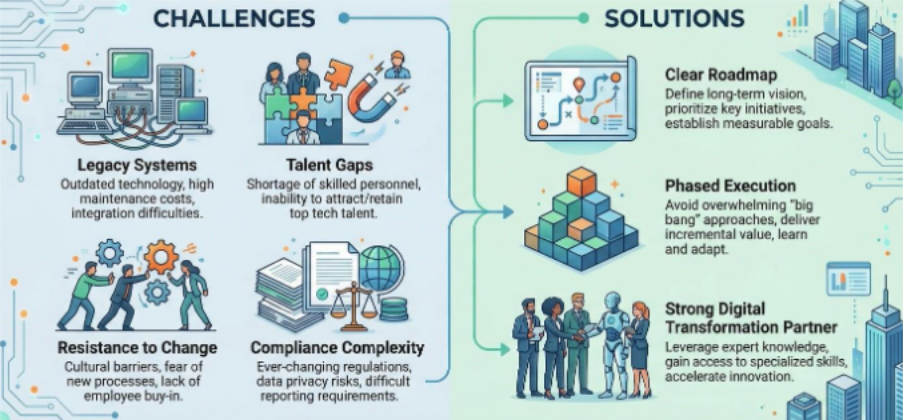
In this phase, business leaders need to identify how AI supports their long-term goals, whether it is enhancing customer satisfaction, increasing profits, decreasing operational costs, or enhancing threat management. AI initiatives should be aligned with business technique, industry positioning, and competitive distinction.
Core Pillars for Modernizing the Modern Infrastructure
Data is the lifeblood of AI. Without high-quality, available, and well-governed information, even the most advanced AI systems will stop working.
Enterprises must buy centralized information platforms, cloud or hybrid infrastructures, real-time information pipelines, and strong information governance frameworks. Data personal privacy, security, and compliance with policies such as GDPR and emerging AI laws must also be integrated into the data technique. This phase ensures that AI systems are built on trusted, ethical, and scalable information foundations.
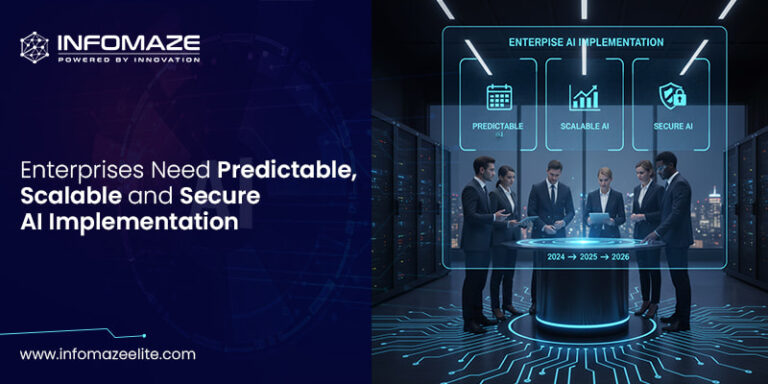
Not every procedure should be automated, and not every problem needs AI. Smart business AI adoption concentrates on use cases that provide quantifiable company impact. High-value usage cases typically consist of intelligent automation, predictive analytics, personalized suggestions, fraud detection, need forecasting, and conversational AI. These use cases directly improve performance, client experience, and decision quality.
Mastering Your AI Path for 2026
This stage includes building, training, and deploying AI designs into real service environments. It consists of selecting proper maker learning techniques, training models on business information, screening performance, and integrating AI systems with existing applications.
Company leaders should comprehend how AI shows up at decisions to make sure trust and responsibility. This guarantees that AI systems stay precise, pertinent, and protect over time.
An enterprise-level AI governance framework consists of clear accountability structures, ethical standards, threat evaluation processes, and human oversight systems. This ensures that AI systems line up with organizational worths, legal standards, and social expectations.

Latest Posts
Charting Your Digital Roadmap for 2026
Mastering the 2026 Landscape of Digital Transformation
Strategic Planning for Your 2026 Digital Shift